
How PRINCE2, Agile, Waterfall, Lean, Six Sigma, Kanban, and Hybrid PM work in health and care delivery
In digital health, getting the project approach right isn’t just a technical decision, it directly affects clinicians, patients, and frontline operations. With limited time, funding pressures, and lives at stake, the wrong methodology can cause delays, burnout, and mistrust. The right one? It creates space for innovation, improves patient care, and supports safe implementation.
Here’s a practical guide to seven widely used project management methodologies, how they work, when to use them, and how they apply to digital health settings, particularly within the NHS.
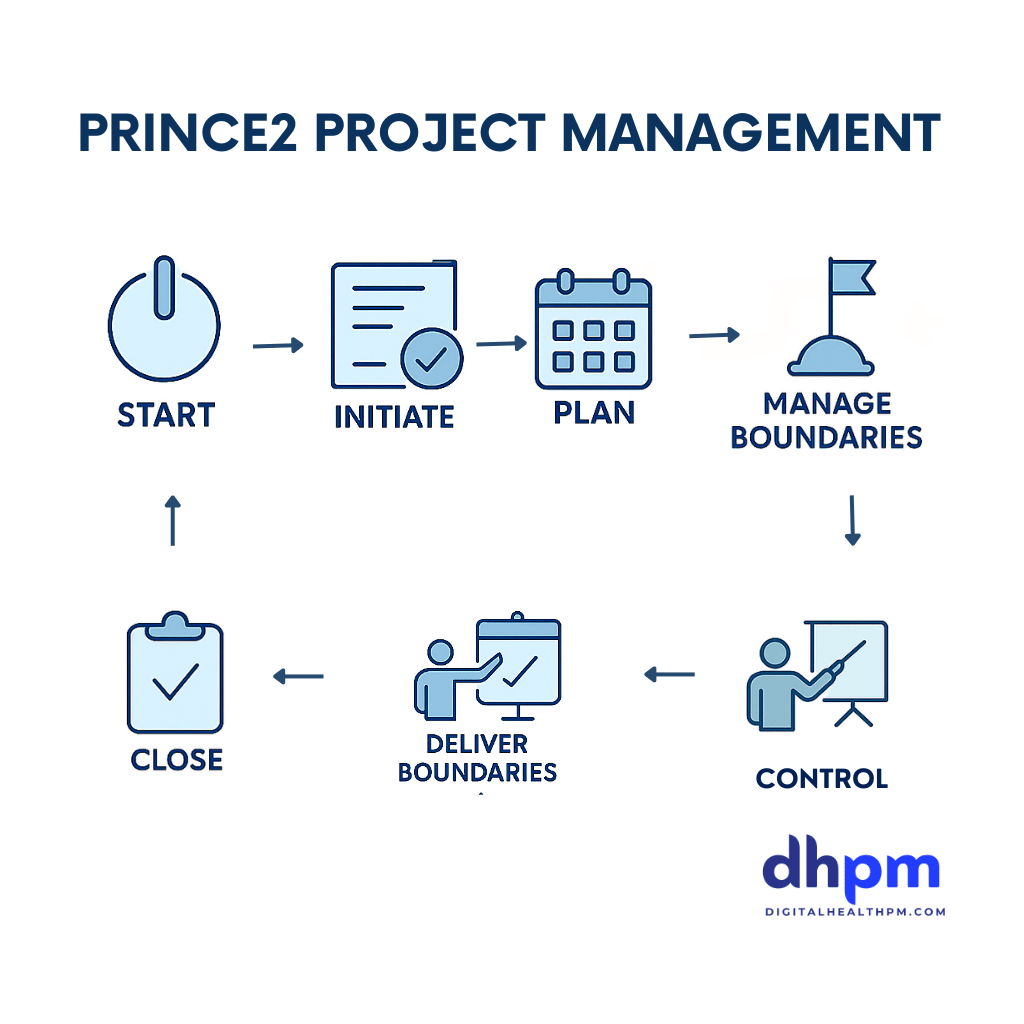
1. PRINCE2: Controlled, Process-Based Governance
PRINCE2 remains a go-to for many NHS organisations, particularly where governance, audit trails, and public accountability matter.
It’s most useful for:
- Capital-funded change projects
- EPR implementations
- Trust-wide infrastructure upgrades
- NHS England reporting programmes
The strength of PRINCE2 lies in its structure: clear roles (like SROs, PMs, and project boards), gated stages, and decision-making. But it can be too rigid and documentation-heavy for fast-moving digital projects. Many PMs adapt it, using only the bits that add value.
A 2020 HSJ article highlighted how overreliance on rigid PRINCE2 processes slowed delivery during early COVID-19 response efforts, where faster collaboration was needed.
Best used when:
You need clear governance, formal approvals, and audit-ready processes.
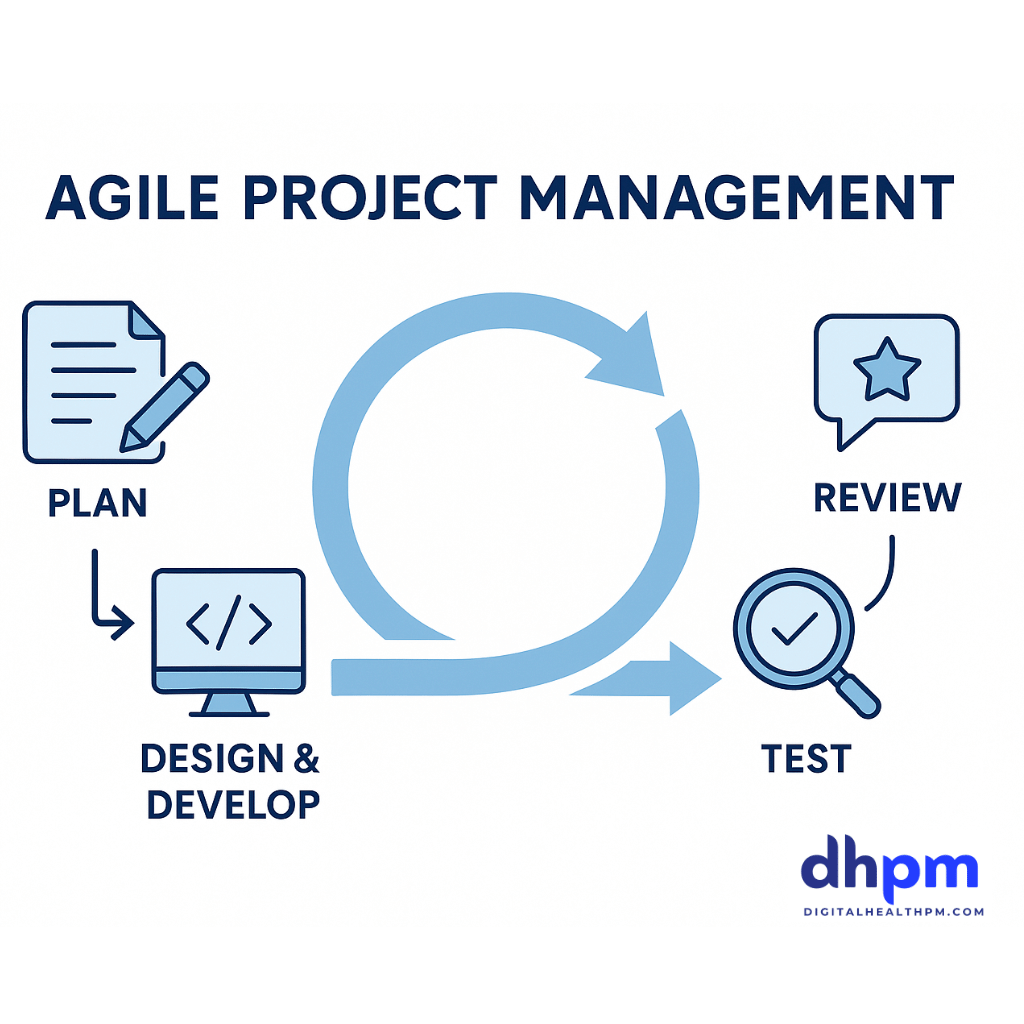
2. Agile: Fast, Iterative and User-Centred
Agile flips the traditional model. Work happens in short cycles (‘sprints’) with regular feedback loops. You build, test, learn, and adapt. Perfect for innovation.
It’s particularly suited to:
- Digital tools with changing user needs (e.g. virtual consultation platforms)
- Projects involving clinicians or patient co-design
- Start-up partnerships or pilot services
Agile encourages close collaboration. But it needs high engagement and works best with small, empowered teams. In regulated settings, compliance and governance can become tricky unless you build those into the sprint cycles.
Used well, Agile can help avoid the pitfalls of overengineering. A King’s Fund evaluation of NHSX-funded pilots showed faster user feedback loops helped tailor digital triage tools more effectively to local workflows.
Best used when:
Flexibility, speed, and engagement are critical.
3. Lean: Stripping Back to What Matters
Lean aims to maximise value and minimise waste. It encourages you to simplify workflows, eliminate duplication, and focus only on what adds value to the user, in this case, often clinicians or patients.
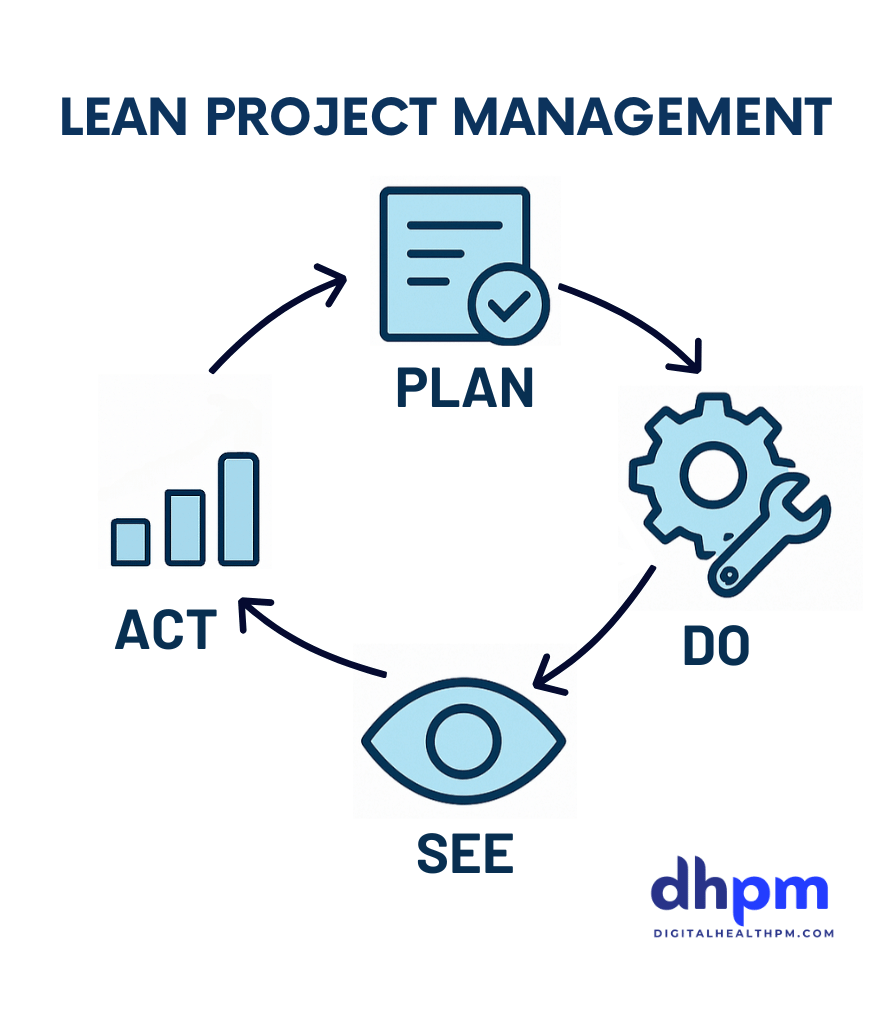
Lean principles apply well to:
- Service redesigns (e.g. outpatient transformation)
- Workflow automation projects (e.g. appointment scheduling)
- Process improvement work (e.g. digital referral pathways)
Lean relies on cultural change and staff empowerment. It’s not just about tools; it’s about mindset. Done well, it helps teams own and shape their work. A 2021 NHS Improvement report showed that Lean tools helped cut appointment DNAs in some Trusts by up to 40% through simple, staff-led changes.
Best used when:
You’re redesigning existing processes to be more efficient or patient-centred.
4. Six Sigma: Reducing Variation and Error
Six Sigma is highly analytical. It uses data (often through the DMAIC cycle: Define, Measure, Analyse, Improve, Control) to drive consistency and reduce defects. Think of it as Lean’s more data-obsessed cousin.
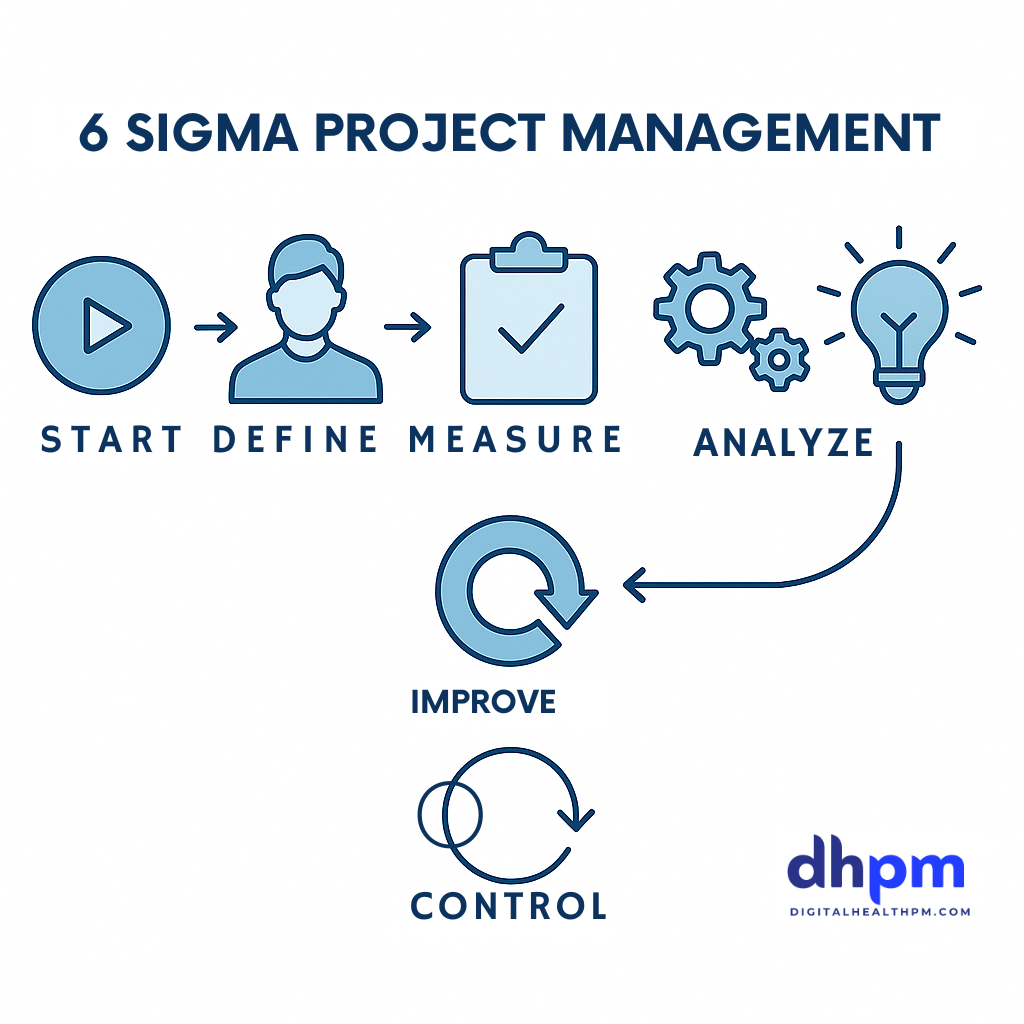
In digital health, it’s often used for:
- Reducing prescribing errors through clinical decision support systems
- Improving response times in digital triage services
- Analysing performance of remote monitoring tools
However, Six Sigma can be overkill in projects without clear, quantifiable outputs. And it requires training and specialist capability that many NHS teams don’t routinely have in-house.
Best used when:
You’re tackling a clear performance issue and have robust data to work from.
5. Waterfall: Structured and Sequential
Waterfall is a linear, phase-by-phase method. Think of it like a relay race—each stage (requirements, design, build, test, release) is handed off to the next with little overlap.
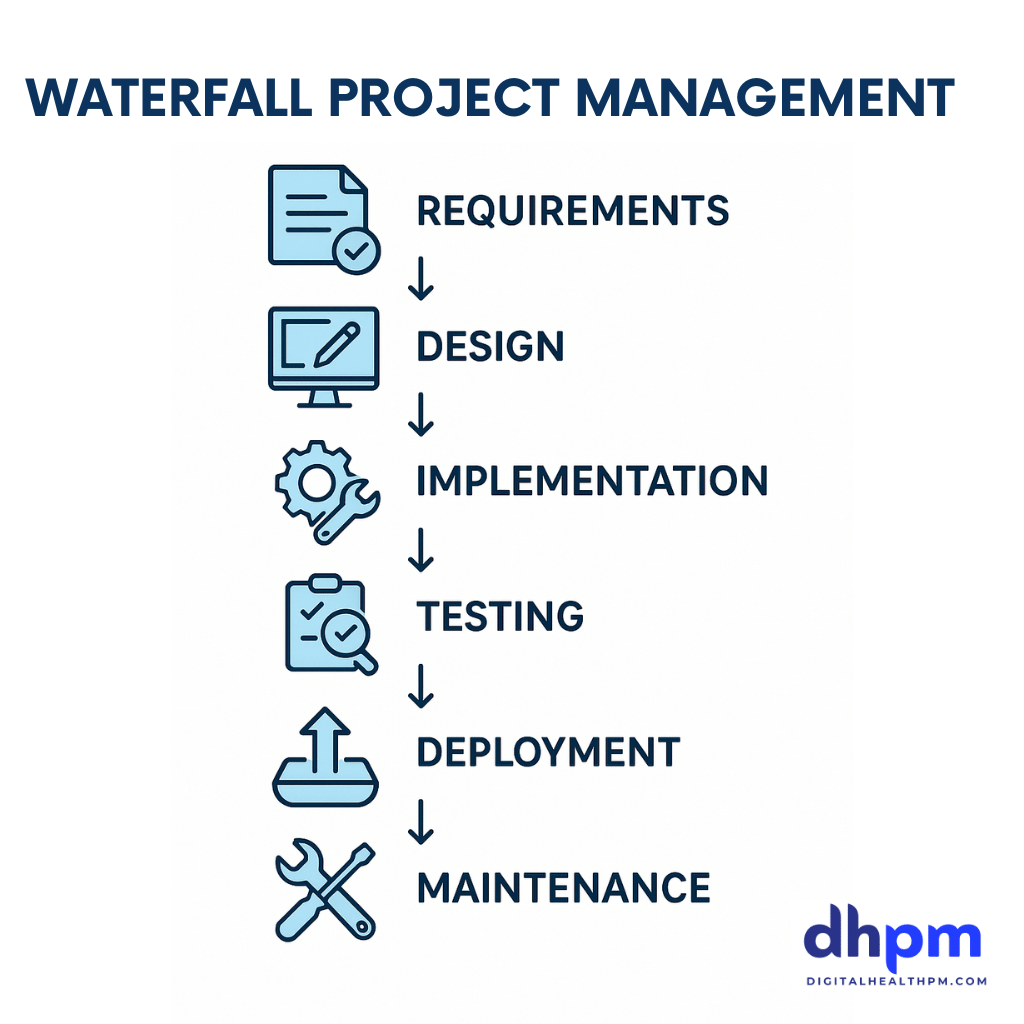
It works well for:
- National IT programmes with fixed scope (e.g. early NPfIT projects)
- Projects with high regulatory demands (like integrating with the Spine)
- Infrastructure rollouts (e.g. new PACS systems)
Strengths include predictability, clear documentation, and easy cost estimation. But it’s rigid. If clinical needs change mid-way—as they often do—it can be slow to respond.
A review in BMJ Open (2022) noted that Waterfall-based electronic health record (EHR) implementations often underdelivered when clinicians weren’t engaged early or requirements shifted post-spec.
Best used when:
You know exactly what’s needed upfront and change is unlikely.
6. Kanban: Visual Workflow and Flow Control
Kanban focuses on visualising tasks, limiting work-in-progress, and continuously improving flow. It’s not a methodology in the traditional sense, but a tool for managing work effectively.
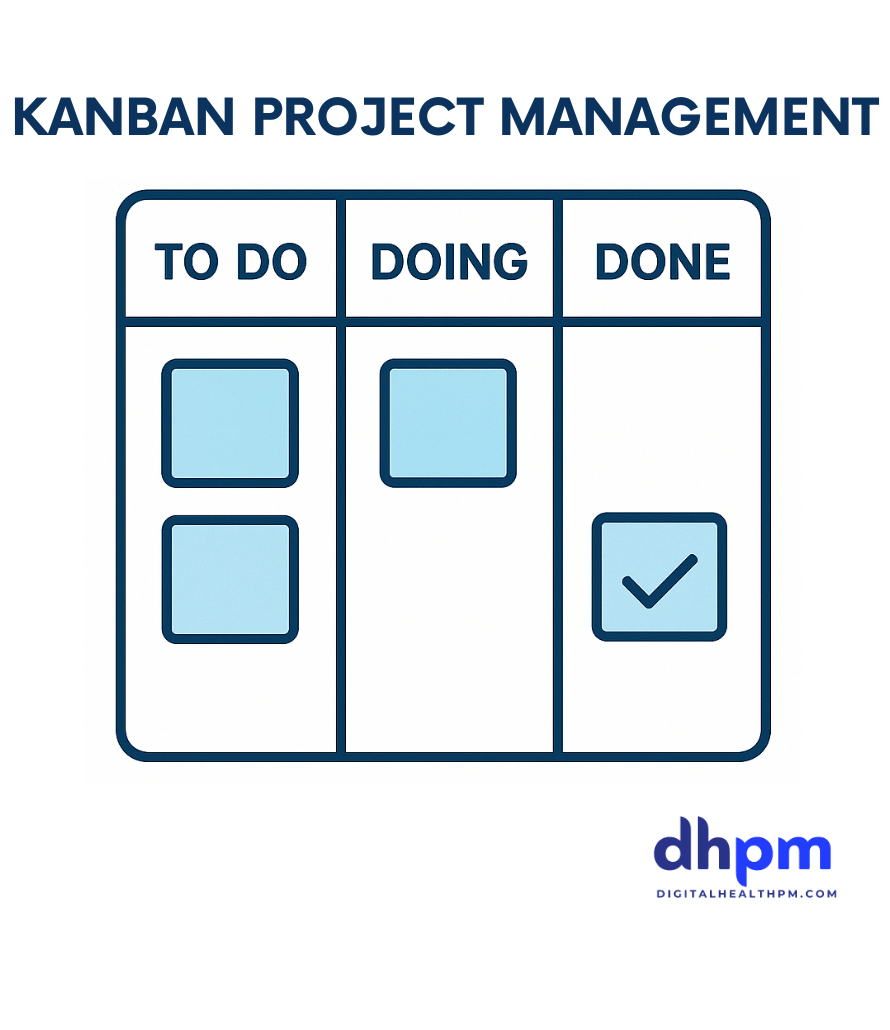
It’s ideal for:
- Operational support teams managing digital health service tickets
- BAU delivery environments like PMOs, digital helpdesks or EPR configuration teams
- Workflow-heavy tasks (e.g. onboarding new practices to a shared care record)
Kanban thrives in environments that need visibility and fast throughput. It doesn’t impose formal stage gates or documentation, so it’s not great for strategic, time-bound projects unless combined with another method.
Best used when:
You need transparency and flexibility in high-volume, repeatable work.
7. Hybrid: Blending to Fit the Real World
No single methodology fits every digital health project. Many NHS teams end up creating a hybrid—using PRINCE2 to report up, Agile to engage frontline staff, and Kanban to manage delivery.
This is especially useful for:
- Cross-functional programmes involving tech and clinical teams
- Programmes where national and local delivery models intersect
- Projects balancing formal assurance with innovation (e.g. AI pilots)
For example, in one Trust’s virtual wards programme, Agile was used for rapid prototyping with clinical teams, while PRINCE2 governed the overarching funding and assurance framework. This blended approach helped meet tight NHSX deadlines while still ensuring frontline buy-in.
Best used when:
You need structure for external reporting, but flexibility to iterate locally.
Final Thoughts
There’s no one-size-fits-all method. The best approach depends on:
- How clearly defined your scope is
- How fast requirements are likely to change
- The level of governance and audit required
- Your team’s skills, availability, and culture
Choosing a project methodology isn’t just a technical decision—it shapes how teams communicate, how clinicians engage, and how patients ultimately experience care.
If you’re working on a digital health project and unsure which route to take, ask yourself: what’s more important—speed, structure, safety, or engagement? That should guide your choice.
Want help applying the right methodology to your digital health project?
If you need expert guidance on selecting the best project management approach for your digital health initiatives, I’m always happy to help. You can reach me directly here or connect via LinkedIn.
Or start with one of our free templates:
Let’s build better projects, ones that stick, scale, and actually work for clinicians and patients.